
POWDER BED FUSION(PBF)
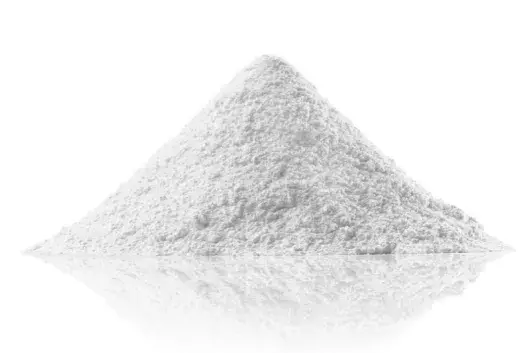
Powder bed fusion (PBF) technology, also known as powder bed fusion, is an additive manufacturing technique based on the deposition of successive layers of powdered material, which are fused using different energy sources.
Compared to other additive manufacturing techniques, powder bed fusion makes it possible to produce components in titanium or nickel metal alloys and is also an option for plastic manufacturing.
ADVANTAGES OF POWDER BED FUSION (PBF) TECHNOLOGY
1
Productivity
Thanks to the arrangement of several parts on the same tray, productivity levels that are difficult to reach with other technologies can be achieved.
2
Costs
The use of powder materials makes it possible to obtain more economical materials while ensuring maximum quality. In addition, the increase in demand has made it possible to reduce raw material production costs.
3
Precision and detail
Thanks to the small particle size of the powder, it is possible to achieve details that would not be possible with other filament technologies.
4
Isotropic properties
During the melting process, several layers are bonded together to guarantee isotropic mechanical properties, at the level of the most demanding industries.
LASER MELTING
SLS
Selective Laser Sintering
Selective Laser Sintering
Laser sintering of polymeric material allows the manufacture of parts with high productivity and total geometrical freedom. The absence of supports during manufacturing enables the production of incredible geometries.

DMLS / SLM
Direct Metal Laser Sintering
The melting of powder metal by means of laser allows the manufacture of metal parts with
mechanical properties superior to melting and with organic shapes never seen before.

ELECTRON BEAM MELTING
EBM
Electron Beam Melting
Thanks to electron beam melting, high energy power is available to melt the material at high temperatures, thus avoiding high density substrates such as those required in the laser process.

APPLICATIONS OF SELECTIVE MELTING OF POWDERED MATERIAL
MASS PRODUCTION
PROTOTYPES
HYDRAULIC POWER PACKS
HEAT EXCHANGER

7 Families of Additive Manufacturing
Additive manufacturing is gaining momentum as a process capable of manufacturing highly complex components quickly and directly. In previous articles, we have already mentioned some advantages and applications of additive manufacturing and we have also explained how...
Additive Manufacturing: Benefits for the Aerospace Industry
Additive manufacturing (AF) is the manufacturing method that has made it possible, more than any other method, to create products of high functional efficiency and great lightness, both essential aspects for the aerospace sector. In addition, the aerospace industry is...
Additive Manufacturing Step by Step
The additive manufacturing process consists of several stages, some of which involve a succession of information conversions using different software.