
The whole additive manufacturing process can be explained in 9 different steps, five of which involve a succession of information conversions through different software.
Let’s look in detail at each stage of the process:
- Creation of the 3D model
The additive manufacturing process begins with the creation of a CAD (Computer-Assisted Design) model. Computer-aided design is the use of computer programs to create, modify and analyse three-dimensional (also two-dimensional) graphical representations of physical objects.
- STL Format
Once this model is created, it is transformed into .STL format (or .AMF and .3MF, more recent formats). What is .STL format? It is a triangulated representation in a 3D CAD model.

- The construction process
The three-dimensional model is divided into layers (slicing). Previously, it will be necessary to define the orientation of the machine or construction and to determine whether there will be supporting structures (which may be necessary for deposition of layers in near-horizontal orientations).
To continue, the production sequence is detailed. These actions are also carried out with specific software that is often determined by each printer and technology.
The next step is called nesting: the manufacturing chamber or platform must be prepared for grouping or stacking the parts to be manufactured at the same time. Likewise, the control specimens will be prepared and manufactured at the same time as the parts in order to validate the result of the manufacturing process, once it has been carried out.
- The raw material
After receipt of the material and verification (if necessary) of the certificates attesting to the key characteristics (characteristics defined in the applicable standard or in the technical specification of the purchase), the raw material shall be loaded.
- Preparing the printer
One of the essential steps in the preparation of the machine will be the cleaning of residues from previous productions.
Each technology will require, at this stage, different setup, calibration and configuration processes from the printer.
- Manufacturing
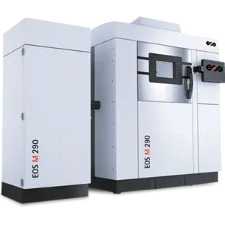
In the actual manufacturing phase, the machine will execute the commands to build the slice defined in the previous phase, layer by layer.
This phase will require control and monitoring: of parameters, control data logging and sensing and printing.
The steps to be followed in this phase will of course be determined by the selected technology.
- Inspection, verification and testing
Dimensional verification is particularly important at this stage of the process and can be carried out manually or by more sophisticated processes such as 3D scanners or CMM. This is an essential process as critical dimensions, tolerances and geometries (according to part requirements) are verified.
This stage also includes the validation of the monitoring process from the previous phase.
- Post-processing
The post-processing will be different with each technology, but most of the time cleaning and some treatment will be necessary for the improvement of the surface.
- Inspection of the finished part
The inspection of the piece, once finished, can be:
- Dimensional
- Surface finish
- Through non-destructive testing (NDT)
Rigour, our hallmark
At Mizar Additive we are rigorous with our manufacturing processes, and we provide each phase with the necessary tools and procedures to achieve maximum quality and professionalism.
